Key takeaways
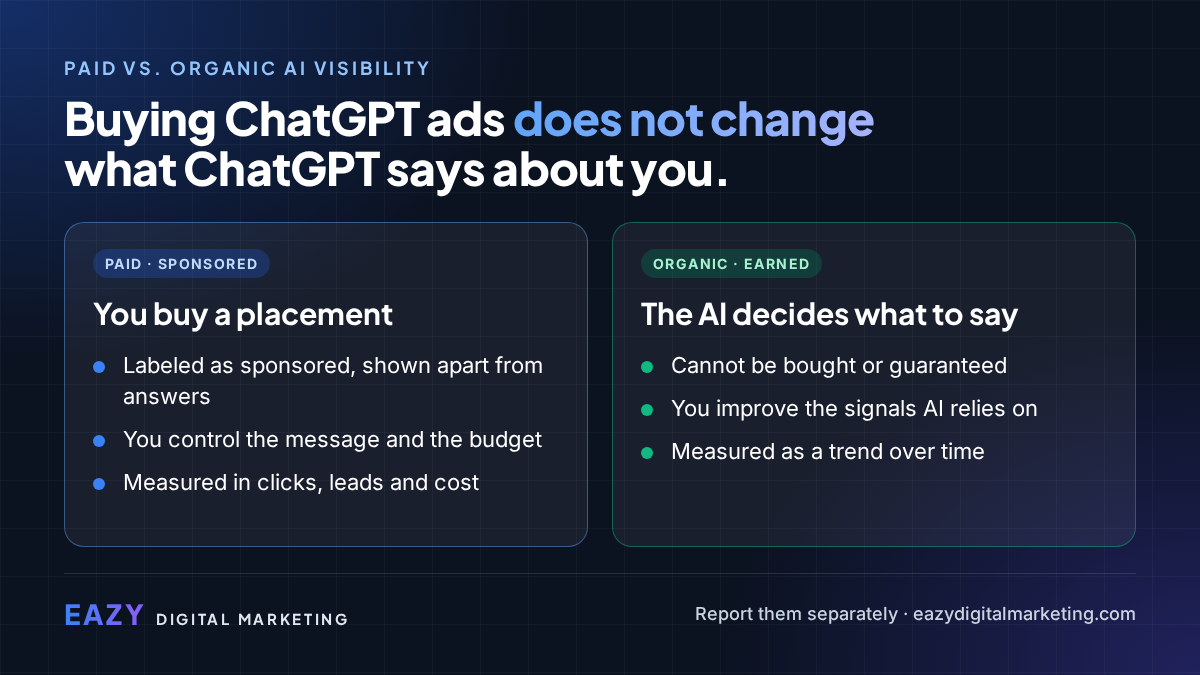
- Paid AI visibility is a labeled ad placement you buy. Organic AI visibility is how AI answers describe you, which you earn.
- Per OpenAI, ChatGPT ads do not influence ChatGPT’s answers, so buying ads does not improve organic mentions.
- Reporting the two together hides which one is actually producing customers.
- Measure each with its own method, then connect both to leads and revenue.
Two kinds of AI visibility
When a customer asks an AI assistant for help, your business can appear in two very different ways. It can appear in the answer itself — mentioned, described or recommended by the AI. Or it can appear as a sponsored ad placed alongside the conversation.
Both are valuable. They are not the same thing, they are not earned the same way, and they should never be added together in one number.
What paid AI visibility is
As of October 2026, OpenAI states that ChatGPT ads are labeled “Sponsored,” shown separately from answers, targeted by conversation context, and do not influence ChatGPT’s responses. You pay for placement through an auction, and you can switch it on or off.
Paid visibility is measurable in the familiar way: impressions, clicks, cost, conversions. It is fast to start and stops when the budget stops.
What organic AI visibility is
Organic AI visibility is whether, how often and how accurately AI systems mention your business when customers ask relevant questions. No one can buy it and no one can guarantee it. It is shaped by the signals AI systems rely on: clear service pages, consistent business information, genuine reviews, credible third-party mentions and direct answers to real questions.
It is slower to build and does not switch off when spending stops. That durability is exactly why it deserves its own measurement.
Why combining them misleads you
A single blended “AI visibility” number creates three problems:
- It hides cause and effect. If the number rises, you cannot tell whether ads or organic work moved it.
- It inflates organic progress. Ad impressions can make organic efforts look more successful than they are.
- It distorts budget decisions. You may keep paying for a channel that is not working, or cut one that is.
How to measure each honestly
Paid: use platform reporting plus your own conversion tracking, and judge results on qualified leads and revenue. Organic: use a fixed set of representative prompts, run on a schedule, and track the trend — remembering that AI answers vary and every result is a point-in-time sample.
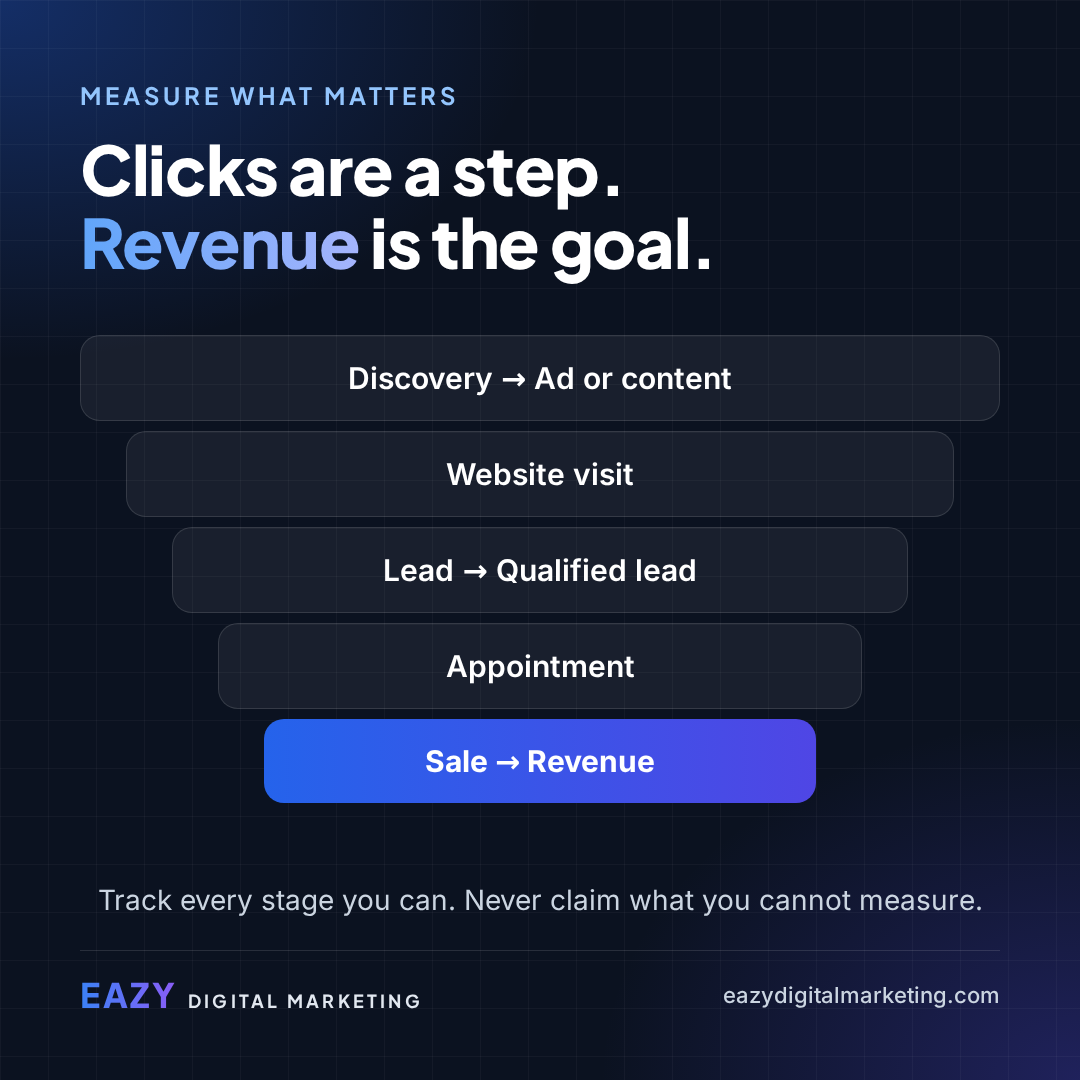
Then connect both to the same business outcome. Visibility is only the first step; the goal is customers.
A simple framework: Get Seen, Get Found, Get Customers
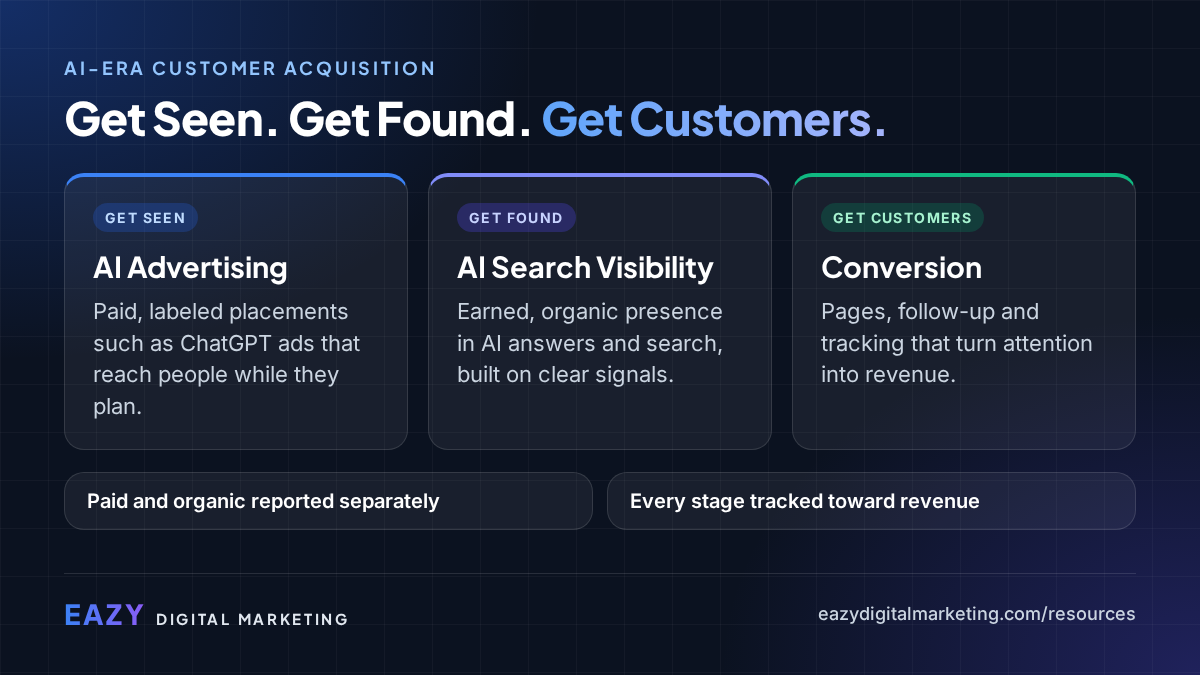
We organize this work in three parts. Get Seen covers paid placements such as ChatGPT ads and Google Ads. Get Found covers organic visibility in AI answers, search and Google Business Profile. Get Customers covers the pages, tracking and follow-up that turn either kind of visibility into revenue. Each part has its own scorecard, and all three report to the same bottom line.
Share these takeaways
- “Buying ChatGPT ads does not change what ChatGPT says about you.”
- “Paid visibility is bought. Organic visibility is earned. Report them separately.”
- “If your AI visibility report mixes ads and organic mentions, you cannot tell what is working.”
Related services
More guides
- ChatGPT Ads vs. Google Ads: How They Differ and How They Work Together
- GEO, AEO and LLM Visibility, Explained in Plain English
- An AI Visibility Checklist for Local and Multi-Location Businesses
- Is Your Business Ready for ChatGPT Ads? A 7-Point Readiness Checklist
- Google Business Profile Suspended? What to Do First (and What to Avoid)